
What Can Go Wrong with Scenting, and How a Managed Service Prevents It
Scent can make a space feel welcoming and memorable. When it isn't done properly, it can also do the opposite. The good news is that the problems are predictable, and each one can be managed. That's exactly why scenting works best as a managed service rather than a gadget bought online.
Below are the most common risks, and how DuraScent handles each one.
1. Too much scent
The risk: This is the most common mistake. Staff complain, guests comment, and the brand comes across as heavy-handed. It usually happens because the level is set by someone whose nose has already adapted. After some time in the same room, we stop noticing a scent and are tempted to turn it up.
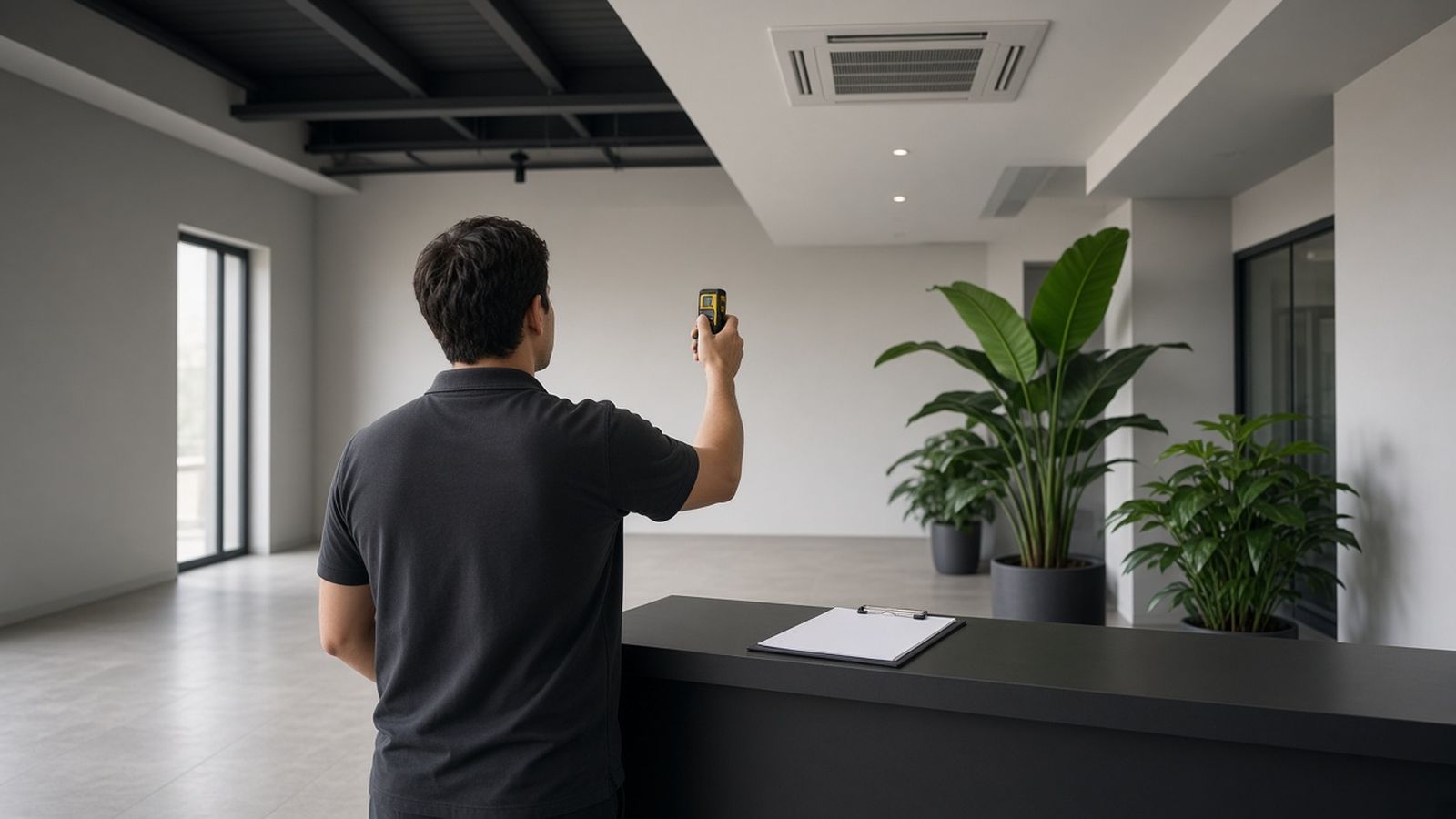
How we manage it: We set the intensity during the survey and trial, judge it as someone walking in from outside would, and start on the conservative side. The aim is noticeable on arrival, never overpowering. If it feels too strong, let us know and we'll review the level at the next monthly Preventive Maintenance Visit.
2. People who are sensitive to fragrance
The risk: Some staff and visitors are sensitive to fragrance. Ignoring that creates discomfort and can harm your reputation.
How we manage it: Low levels, scent-free zones where needed, and a clear way to raise a concern. If your space has visitors who may be sensitive, such as in a clinic, tell us during the survey so we can recommend a suitable scent and setting.
3. Oil of unknown quality
The risk: Cheap oils from unclear sources can be inconsistent, unsuited to diffusion and hard on the machine. The scent changes from bottle to bottle, and nozzles clog.
How we manage it: Our Scent Library of 40+ fragrances comes from European fragrance houses, and the oil is chosen for cold-air diffusion. Because we refill it ourselves, the scent stays the same from one refill to the next.
4. Scent that crowds the air
The risk: Heavy scenting in a closed, air-conditioned space can make the air feel heavy instead of fresh.
How we manage it: We keep levels low, place units with the airflow in mind, and work with your building's ventilation, not against it. Scent complements a clean, well-ventilated space. It doesn't replace either one, and it isn't meant to cover up a problem that cleaning or ventilation should fix.
Indoor air rules in Indonesia. Permenkes No. 48 Tahun 2016, the Ministry of Health standard for office work environments, lists volatile organic compounds (VOCs) among the chemical parameters for indoor air. Fragrance adds VOCs, so heavy scenting can work against a building's indoor air targets. That is one more reason we keep levels moderate, work with the ventilation and involve your facilities team from the start.
5. Health claims
The risk: Saying a scent reduces stress, cleans the air or improves health is risky and usually unsupported.
How we manage it: We describe scent in terms of atmosphere and impression, and we don't make health claims. Research gives useful context: for example, studies have found that softly scented stores were rated more favourably[1], and that guests in a scented hotel room appeared happier than those in an unscented one[2]. But every study has its own setting, so we share them as background, not as a promise.
It also helps to keep three terms apart. Aromatherapy claims health benefits from plant oils. Aromachology studies how scent relates to mood and perception. Ambient scenting, which is what we do, is about the atmosphere of a space. Even scents that people associate with relaxation, such as lavender or soft woods, are best described simply: "a calm, soft atmosphere", not "reduces stress". See our article on scent, memory and perception.
6. Scent near food
The risk: Fragrance near dining areas and kitchens competes with the food and can seem out of place.
How we manage it: We use a very light setting or no scent at all near dining areas, kitchens, and perfume or cosmetics tester counters, and we focus on entrances and washrooms instead.
7. A scent that doesn't fit
The risk: A scent that clashes with your brand, products or interior confuses guests rather than welcoming them.
How we manage it: We help you choose during the survey and the 3-day free trial, so you experience the scent in your own space before deciding. If you want a scent that's unique to your brand, we can develop a custom signature scent.
8. Inconsistency
The risk: Oil runs out, different branches use different products, machines go unserviced, and the scent never becomes recognisable.
How we manage it: Our team handles every refill and carries out a monthly Preventive Maintenance Visit. Each machine runs on an automatic schedule (10 hours a day by default, adjusted to your opening hours), so it doesn't depend on staff remembering to switch it on. If something goes wrong, emergency service is free.
9. Building approvals
The risk: Connecting equipment to a building's central air-conditioning without approval from building management can cause problems, especially in malls and office towers.
How we manage it: For HVAC scenting in large spaces, we plan the installation with you and your building management from the start.
10. Pets and sensitive settings
The risk: Some oils are unsuitable around animals, and clinics and treatment rooms need extra care.
How we manage it: Tell us about pets, treatment rooms or other special needs during the survey. We'll recommend placement, a suitable scent and setting, or keep those areas unscented.
In short: what a managed service does for you
- A site survey before anything is recommended.
- Oil from known European fragrance houses, refilled by our team.
- Conservative intensity, checked with a fresh nose.
- Zoning around food, desks, treatment rooms and sensitive areas.
- A monthly Preventive Maintenance Visit and free emergency service.
- Coordination with building management for HVAC systems.
- A clear, quick way to raise a concern, via WhatsApp.
DuraScent doesn't sell diffusers or oils. We install, refill and maintain them for you, month to month. Start with a free survey and a 3-day free trial.
Frequently asked questions
Is scenting safe for my space and the people in it?
Most problems come from poor practice: too much scent, the wrong placement or unknown oils. We set the intensity to suit your space and avoid sensitive areas. If your space has special needs, tell us during the survey.
What should we do if someone complains?
Take it seriously and let us know. At the next monthly Preventive Maintenance Visit, our technician can lower the intensity, change the schedule, move the machine or zone the area out. Adjustments like these are part of the service.
Can scent hide a bad smell?
Scent isn't a replacement for cleaning or ventilation. It works best in a space that's already clean and well ventilated.
Scent supports atmosphere and impressions. It isn't a guarantee of higher sales or a health product, and results vary from space to space.
Sources
Citations are shown in their original English; DOI links open the publisher’s record in a new tab.
- Spangenberg, E. R., Crowley, A. E., & Henderson, P. W. (1996). Improving the store environment: Do olfactory cues affect evaluations and behaviors? Journal of Marketing, 60(2), 67–80. https://doi.org/10.1177/002224299606000205
- Anguera-Torrell, O., Álvarez León, I., Cappai, A., & Sanmartín Antolín, G. (2021). Do ambient scents in hotel guest rooms affect customers' emotions? European Journal of Tourism Research, 27, 2701. https://doi.org/10.54055/ejtr.v27i.2120