
A Scent Strategy for Your Business: Nine Steps Beyond the Plug-In Air Freshener
A scent strategy is a plan for how fragrance will support your business: what it should achieve, which scent you use, where and how strongly it runs, how it's delivered and looked after, and how you'll know whether it's working.
A plug-in air freshener isn't a strategy. It's a product bought to cover a problem, with no link to your brand, no control and nobody responsible for the result.
Why plug-ins and sprays fall short
- They scent a small area around the socket and little else.
- They can't be scheduled, zoned or fine-tuned.
- Different staff buy different refills, so the business ends up smelling of several unrelated things.
- They look like a household fix to anyone who notices them.
- Nobody reviews anything, so nobody knows whether the scent is helping.
Nine steps to a scent strategy
1. Set the goal.
Be specific. A calmer welcome in a hotel lobby. A showroom where visitors feel comfortable enough to stay a little longer. A recognisable signature across every branch. A meeting room that feels fresh for clients. Each goal leads to different choices.
2. Understand who's in the space.
Who spends time there, for how long, and what do they expect? Business travellers, families at the weekend, clinic patients and staff on long shifts all need different things from the same air. A space used by the same people all day needs a lighter touch than an entrance people only pass through.
3. Choose a scent that fits.
A scent should feel like it belongs to your brand and your space. Simple and clear usually works better than complicated: in one in-store study, a simple, easy-to-recognise scent was linked to higher spending, while a more complex blend didn't show the same effect[1]. You can start with a scent from a library, or develop a custom signature scent that belongs only to your brand.
4. Map the zones.
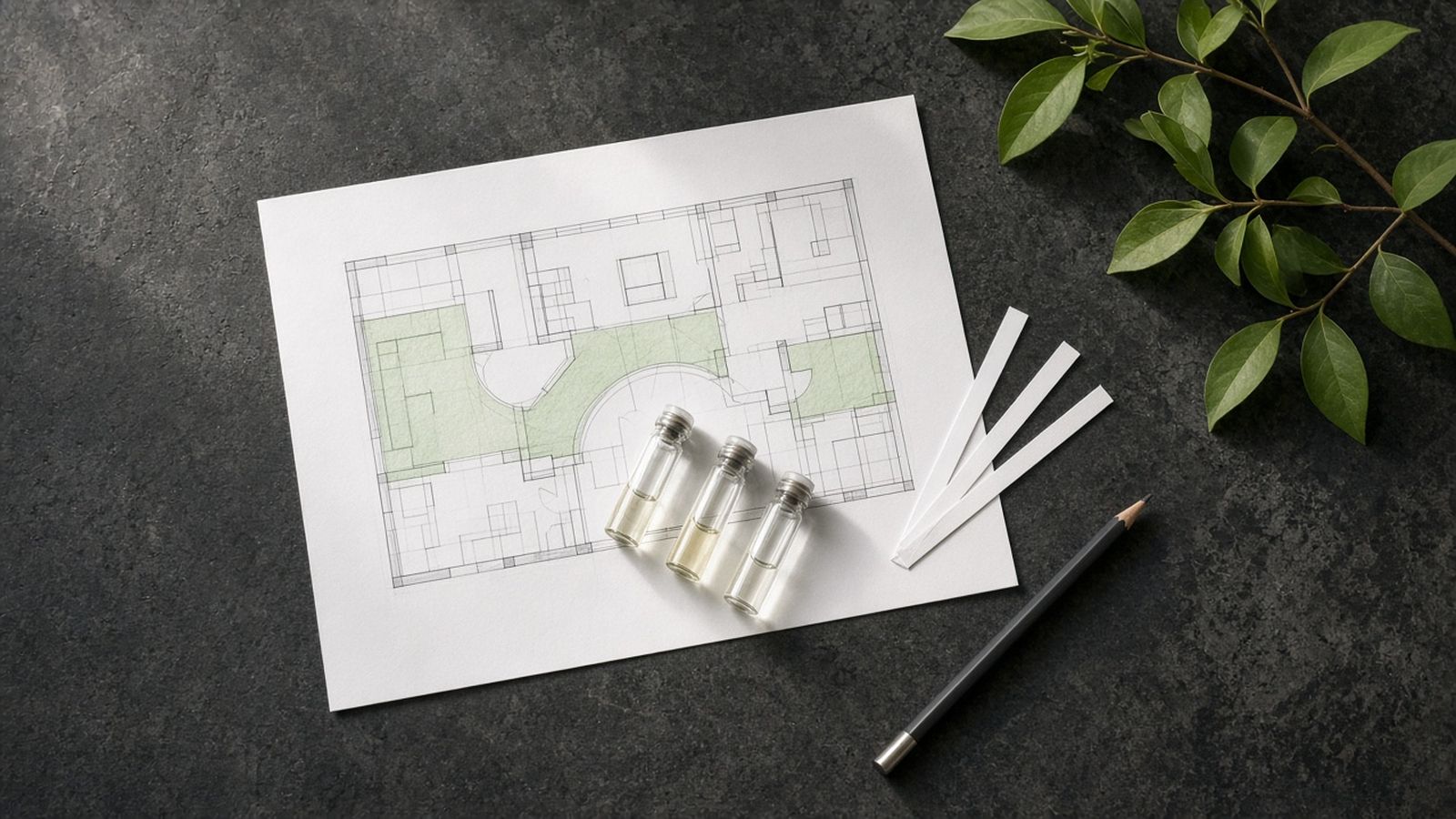
Decide where the scent leads, where it's softer and where there's none at all. Entrances and lobbies usually lead. Dining areas, kitchens, treatment rooms and perfume or cosmetics tester counters should stay very light or unscented.
5. Set the level.
The goal is noticeable on arrival and forgotten a few minutes later. If people comment that it's strong, it's too strong. Always judge with a fresh nose, not that of a staff member who has been in the room all day.
6. Choose the delivery system.
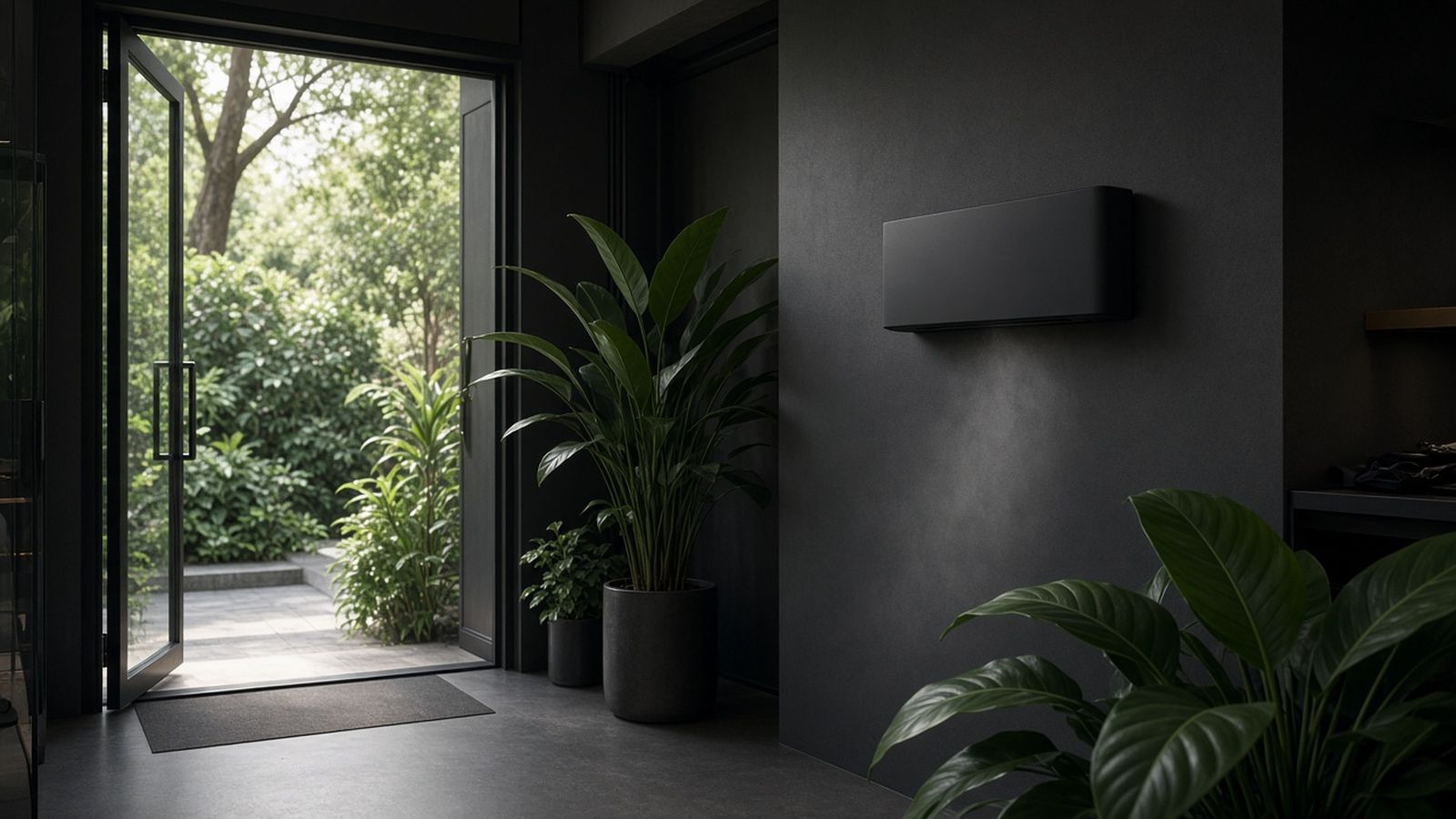
Standalone units suit rooms and smaller shops. For lobbies, atriums and whole floors, scenting through the building's HVAC system spreads the fragrance more evenly and keeps the equipment out of sight.
7. Plan the upkeep.
Refills, cleaning and adjustments need a schedule and one clear owner. Consistency is what turns a pleasant smell into something people remember. Research has found that a pleasant ambient scent helped people remember and recognise brands, especially brands they didn't already know[2], and that only happens if the scent is the same on every visit.
8. Review it.
Note how things stand before you start: customer feedback, time spent in the space, sales trends. Then look again after several weeks of consistent scenting. Studies give useful context, for example, diners in one restaurant stayed longer and spent more when a lavender scent was present[3], but every space is different, so compare against your own starting point.
9. Extend it.
Once the scent is part of your identity, use it more widely: at events, product launches and openings, and in new branches, so the experience feels the same everywhere.
Planning for Indonesian spaces
A few local factors are worth building into the plan:
- Air-conditioning runs all day. Most offices, malls and hotels in Jakarta are air-conditioned from opening to closing, which affects how scent travels. Placement has to follow the airflow.
- Hot, humid entrances. Open fronts and frequently used doors let in warm outside air. The entrance often needs its own setting.
- Building management. In malls and office towers, connecting to the central HVAC usually requires approval from building management, so plan that early.
- Opening hours that change. Schedules may shift during Ramadan, on public holidays or at weekends. The diffuser schedule should change with them.
- People already meet a lot of scent. Malls, cafés and hotels are often scented. Being distinctive and restrained matters more than being strong.
The simplest way to start
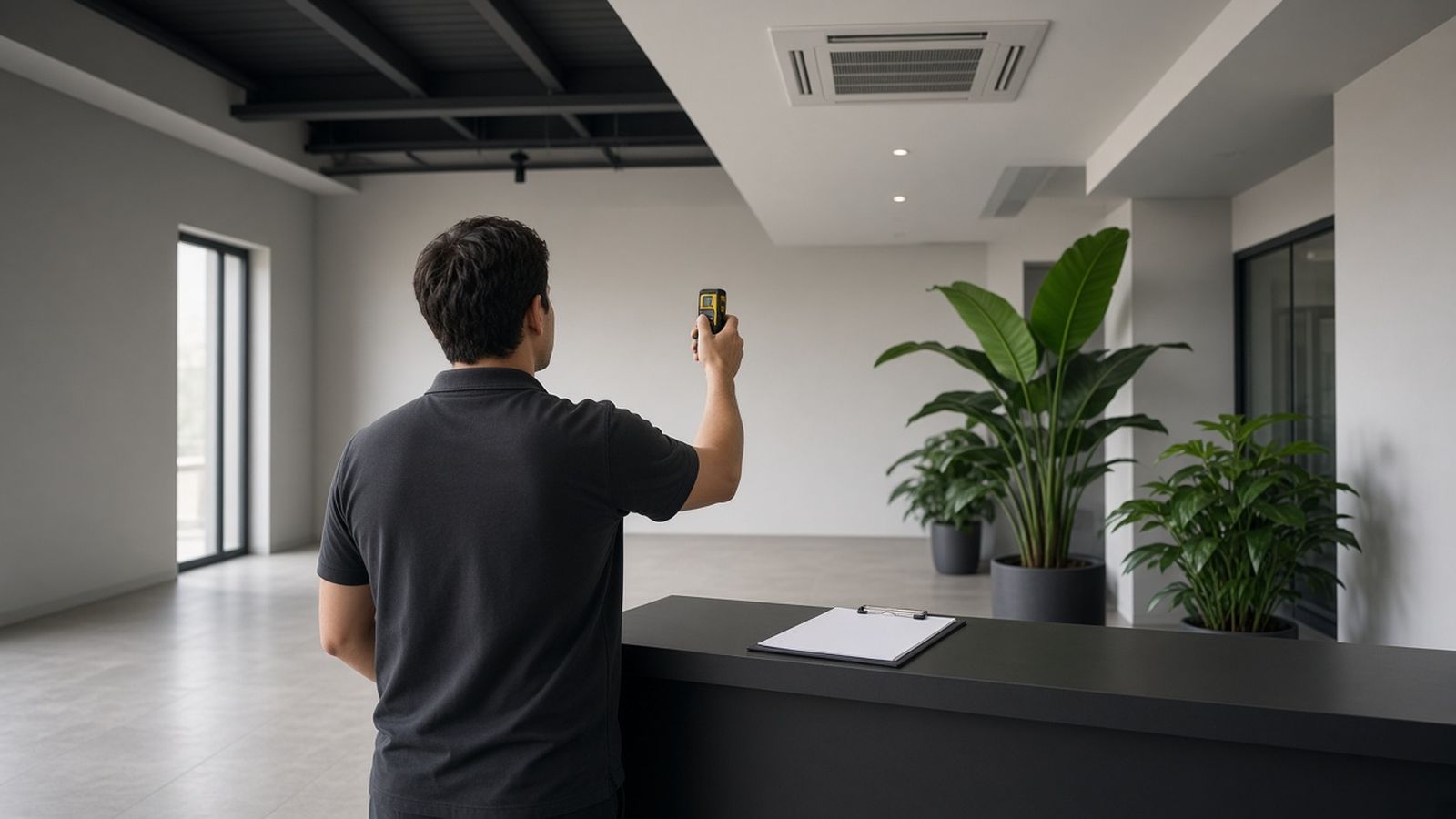
Start with one well-chosen scent in your main customer-facing area, delivered and maintained by a professional service, and review it against your starting point. With DuraScent, that begins with a free site survey and a 3-day free trial in your own space. We help you choose from our Scent Library of 40+ fragrances, set the schedule (10 hours a day by default, adjustable to your opening hours) and look after the units with a monthly Preventive Maintenance Visit. When you're ready, we can also develop a custom signature scent, scent large spaces through HVAC, or scent your events.
Frequently asked questions
What is a scent strategy?
A plan that covers the goal, the audience, the scent, the zones, the intensity, the delivery, the upkeep and how you'll review it.
How long before we can judge it?
Give it several weeks of consistent scenting before you compare it with your starting point.
Can we use the same scent in every branch?
Yes. Using the same scent across your locations is how it becomes recognisable. The setting for each location is adjusted to its size and airflow.
Scent supports atmosphere and impressions. It isn't a guarantee of higher sales, and it doesn't replace cleaning or good ventilation.
Sources
Citations are shown in their original English; DOI links open the publisher’s record in a new tab.
- Herrmann, A., Zidansek, M., Sprott, D. E., & Spangenberg, E. R. (2013). The power of simplicity: Processing fluency and the effects of olfactory cues on retail sales. Journal of Retailing, 89(1), 30–43. https://doi.org/10.1016/j.jretai.2012.08.002
- Morrin, M., & Ratneshwar, S. (2003). Does it make sense to use scents to enhance brand memory? Journal of Marketing Research, 40(1), 10–25. https://doi.org/10.1509/jmkr.40.1.10.19128
- Guéguen, N., & Petr, C. (2006). Odors and consumer behavior in a restaurant. International Journal of Hospitality Management, 25(2), 335–339. https://doi.org/10.1016/j.ijhm.2005.04.007