
Scent and Dwell Time: Setting the Level by How Long People Stay
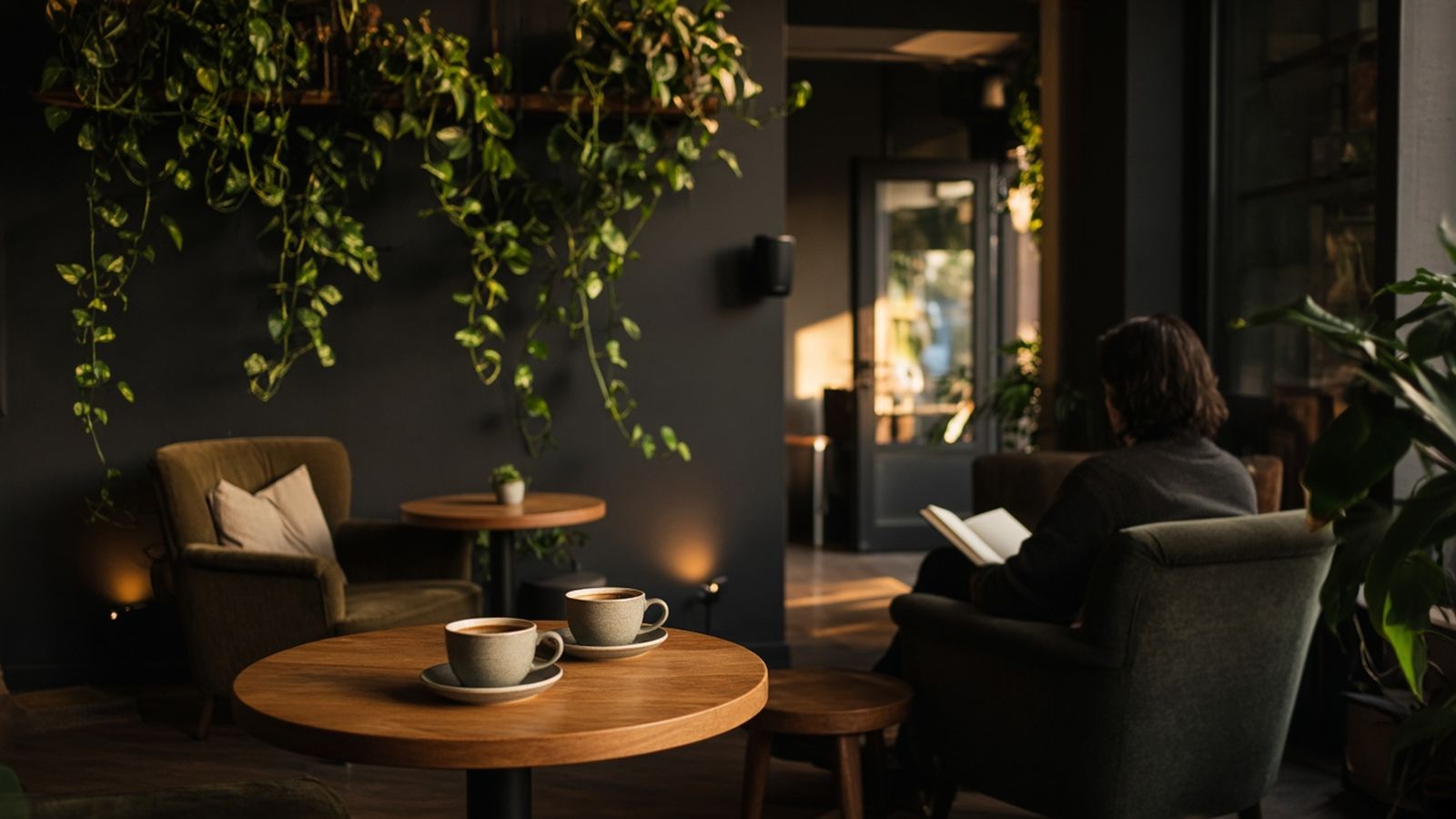
For cafés, restaurants, showrooms and lounges, how long a guest stays matters. A guest who feels comfortable lingers over a second coffee, takes time to look around a showroom or relaxes while waiting. Scent is one of the factors that shape that comfort, along with seating, temperature, music and service.
What the research found
In a field study in a restaurant, diners stayed longer and spent more when a lavender scent was present than when there was no added scent[1]. It's one study in one setting, and it doesn't mean every scent will do the same everywhere. But it supports a sensible idea: a pleasant, fitting atmosphere can make people more inclined to stay.
Other research points the same way for retail. Shoppers rated a store and its products more favourably when it was softly scented[2].
Where this applies
- Cafés and restaurants: scent the entrance, the waiting area and the washrooms. Keep dining tables and the kitchen very light or unscented, so the scent never competes with food and drink.
- Showrooms: car, furniture and property show units, where visitors take time to look and decide.
- Lounges and waiting areas: in banks, offices, clinics and salons, where people wait and the atmosphere shapes how the wait feels.
- Retail: larger stores where customers browse.
Match the level to how long people stay
The longer people spend in a space, the lighter the scent should be. Thinking in three groups helps when setting the level for each area.
Minutes: entrances, lifts, corridors and washrooms.
People pass through quickly, so an entrance can be slightly more noticeable, enough to register before guests move on. Corridors and lifts need only a light touch that doesn't cling to clothes. In washrooms, a moderate, steady level supports a fresh impression, but cleaning and ventilation come first: scent is not an odour remover.
Tens of minutes to an hour: shops, waiting areas, gyms and dining.
The scent should be steady and moderate: present enough to shape the atmosphere, never so strong that it distracts from products, conversation or exercise. Near food, keep it very low or leave it out.
Hours: offices, residential lobbies and hotel rooms.
Keep it very light and consistent. People who have been in the room for a while should barely notice it, and only pick it up again when they come back in.
Why subtle works best for long stays
Our sense of smell adapts: under constant exposure, a scent seems to fade. If a long-stay space starts too strong, the scent can feel overwhelming before that adaptation sets in, and it can still bother people who are sensitive to fragrance. A low, steady level becomes a pleasant background that supports the room without demanding attention.
How to use scent for comfort
Choose a calm, fitting scent.
Soft, familiar scents usually suit spaces where you want people to relax. The scent should match your brand and your space.
Keep it light.
The aim is a comfortable atmosphere, not a strong perfume. If guests comment that the scent is strong, it's too strong.
Mind the food.
In food and beverage spaces, the scent should support the welcome, not the menu.
Make it consistent.
A comfortable atmosphere every day builds a habit of returning. A scent that runs out in the afternoon doesn't.
How to tell whether it helps
Note average visit times, customer feedback and sales trends before you start, then look again after several weeks of consistent scenting. Compare with your own starting point, and remember that season, promotions and staffing also play a part.
How DuraScent helps
We survey your space, recommend a scent from our Scent Library of 40+ fragrances from European fragrance houses and set the level for each area according to how long people stay there, keeping dining areas light or unscented. You can try it free for 3 days. After that, our team takes care of refills and upkeep with a monthly Preventive Maintenance Visit, where the level is also reviewed.
Scent supports atmosphere and comfort. It isn't a guarantee of longer visits or higher sales.
Sources
Citations are shown in their original English; DOI links open the publisher’s record in a new tab.
- Guéguen, N., & Petr, C. (2006). Odors and consumer behavior in a restaurant. International Journal of Hospitality Management, 25(2), 335–339. https://doi.org/10.1016/j.ijhm.2005.04.007
- Spangenberg, E. R., Crowley, A. E., & Henderson, P. W. (1996). Improving the store environment: Do olfactory cues affect evaluations and behaviors? Journal of Marketing, 60(2), 67–80. https://doi.org/10.1177/002224299606000205