
A Signature Scent for Your Hotel: Why "Hotel-Inspired" Copies Fall Short
Many people leave a good hotel wishing they could take the lobby scent home, and plenty of online shops sell oils described as "inspired by" famous hotels. For a hotel, though, a copy of someone else's scent is the opposite of what a signature scent is for. The point is to smell like yourself.
Why copies never smell like the real lobby
- The formula is different. A copy imitates the general impression of a scent, usually with cheaper materials, so the balance and depth are lost.
- The oil isn't made for diffusion. Many copies are blended for home reed diffusers or ultrasonic machines, not for cold-air diffusion across a large space.
- The setting is missing. A lobby scent is shaped by the space: the ceiling height, the airflow, the materials and the level it runs at. Take away the setting and the same oil smells different.
- It isn't yours. A scent anyone can buy online can't become part of your identity.
Why hotels choose a signature scent
A signature scent links the feeling of a stay to your hotel's name. Research has found that a pleasant ambient scent helped people remember and recognise brands, especially brands they didn't already know[1]. In a competitive market, being remembered is valuable, and scent is one of the few parts of the experience guests carry with them without thinking about it.
How a hotel signature scent comes together
1. Define the hotel and the guest.
Is the hotel calm and minimalist, warm and tropical, lively and urban? Who stays: business travellers, families, couples on a weekend?
2. Map the spaces.
Decide where the scent leads (entrance and lobby), where it's softer (lifts and corridors) and where there's none (restaurants and, often, guest rooms).
3. Write the brief.
Describe the mood, the materials, the colours and the words you want the scent to suggest. A good brief avoids asking for a copy of another brand.
4. Sample and refine.
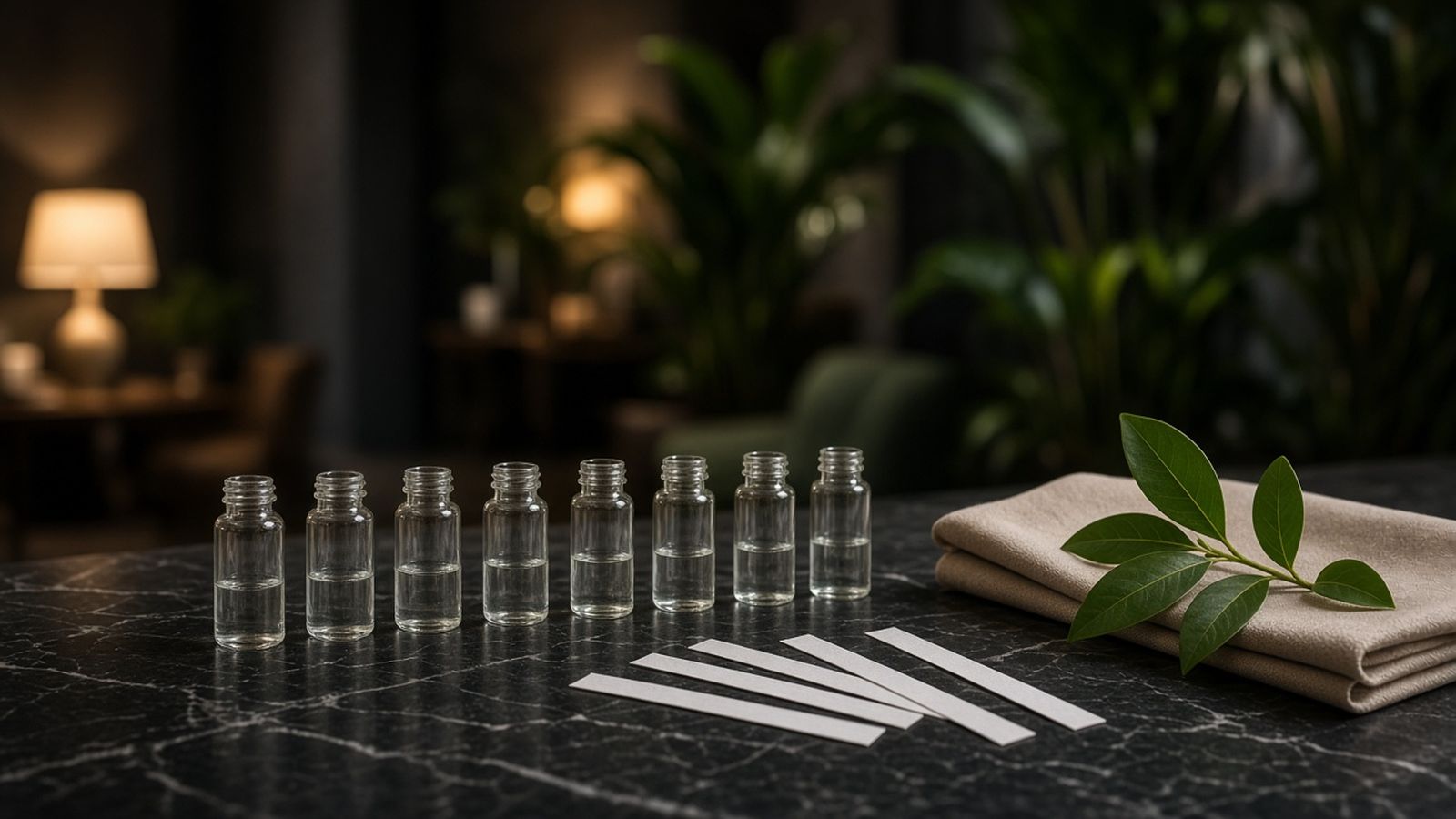
The fragrance house develops a few directions. You compare them, choose one and refine it.
5. Try it in the space.
A scent behaves differently in a real lobby with air-conditioning and open doors than on a paper strip. Trial it in place before rolling it out.
6. Roll it out and look after it.
Set the level for each zone, schedule it around busy times and keep it consistent with routine refills and maintenance.
Start with the library if you're not ready
Developing a signature scent takes time. Many hotels start with a well-chosen scent from a library, learn what works in their spaces, and develop a signature scent later.
How DuraScent helps
We offer a Scent Library of 40+ fragrances from European fragrance houses and can develop a custom signature scent for your hotel. Either way, we survey the property, set up standalone units or HVAC scenting, and look after every unit with a monthly Preventive Maintenance Visit. We don't copy other brands' scents.
Scent supports atmosphere and impressions. It isn't a guarantee of higher ratings or revenue.
Sources
Citations are shown in their original English; DOI links open the publisher’s record in a new tab.
- Morrin, M., & Ratneshwar, S. (2003). Does it make sense to use scents to enhance brand memory? Journal of Marketing Research, 40(1), 10–25. https://doi.org/10.1509/jmkr.40.1.10.19128