
Cold-Air Diffusers for Business: Why the Machine Is Only Half the Job
A quick note first: this article is about scent diffusers that fragrance a business space. They have nothing to do with medical nebulisers, which are health devices. A scent diffuser is not a health device and should never be used as one.
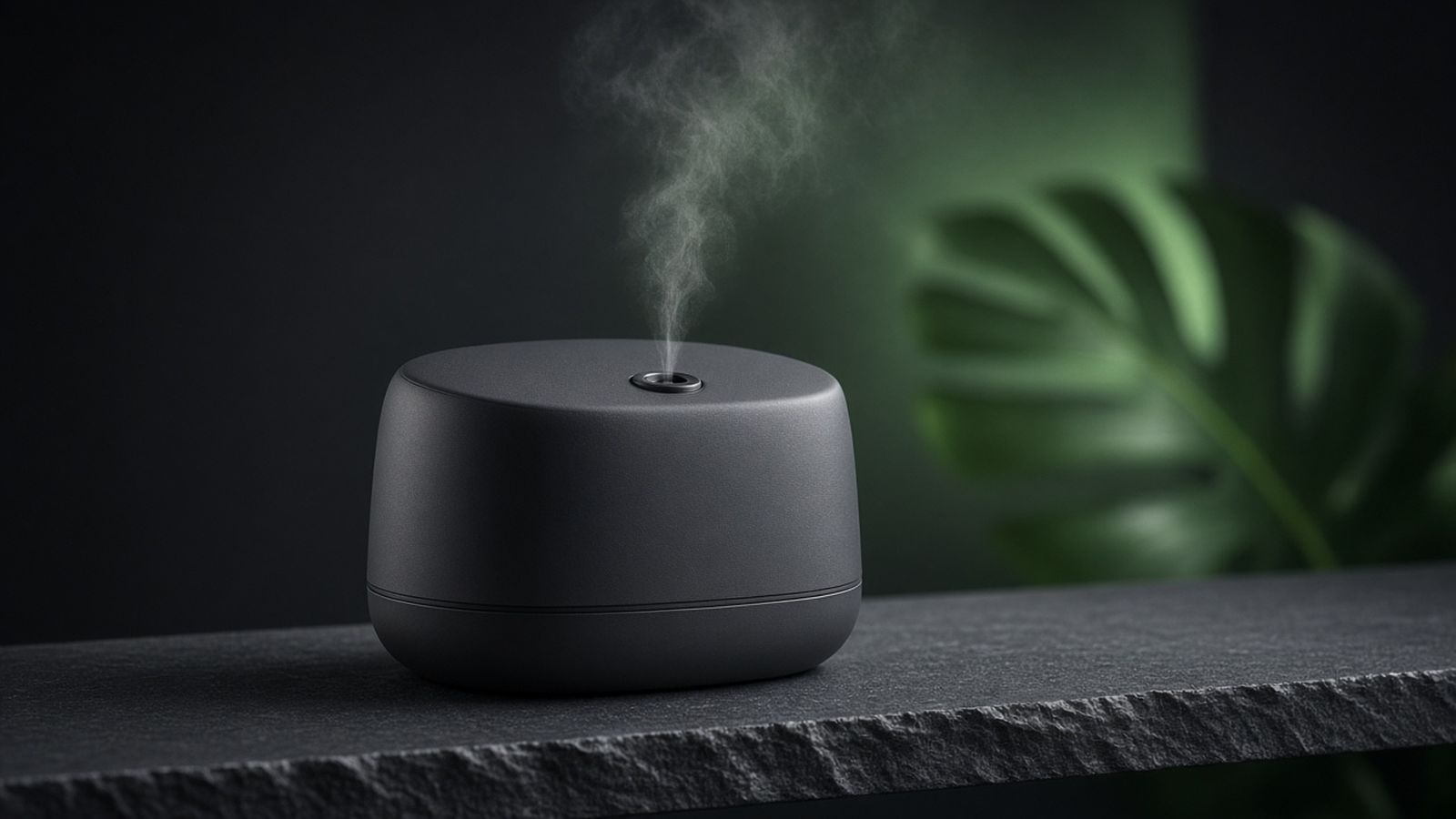
A cold-air diffuser, also called a nebulising or waterless diffuser, uses a stream of air to break fragrance oil into very fine particles. It uses no water and no heat. It's the most widely used technology in professional scenting, from a boutique reception to a system connected to a building's air-conditioning. It's also easy to buy one online and assume the job is done. In practice, that's often where the problems start.
How a cold-air diffuser works
Inside the unit, a small pump pushes air through a narrow nozzle. The fast-moving air draws fragrance oil from a reservoir and breaks it into particles fine enough to stay in the air instead of settling on surfaces. The machine works in cycles, a few seconds on followed by a longer pause, and the balance between the two determines how strong the scent is in the room. A micro-processor controls the schedule, so the unit can follow your opening hours automatically.
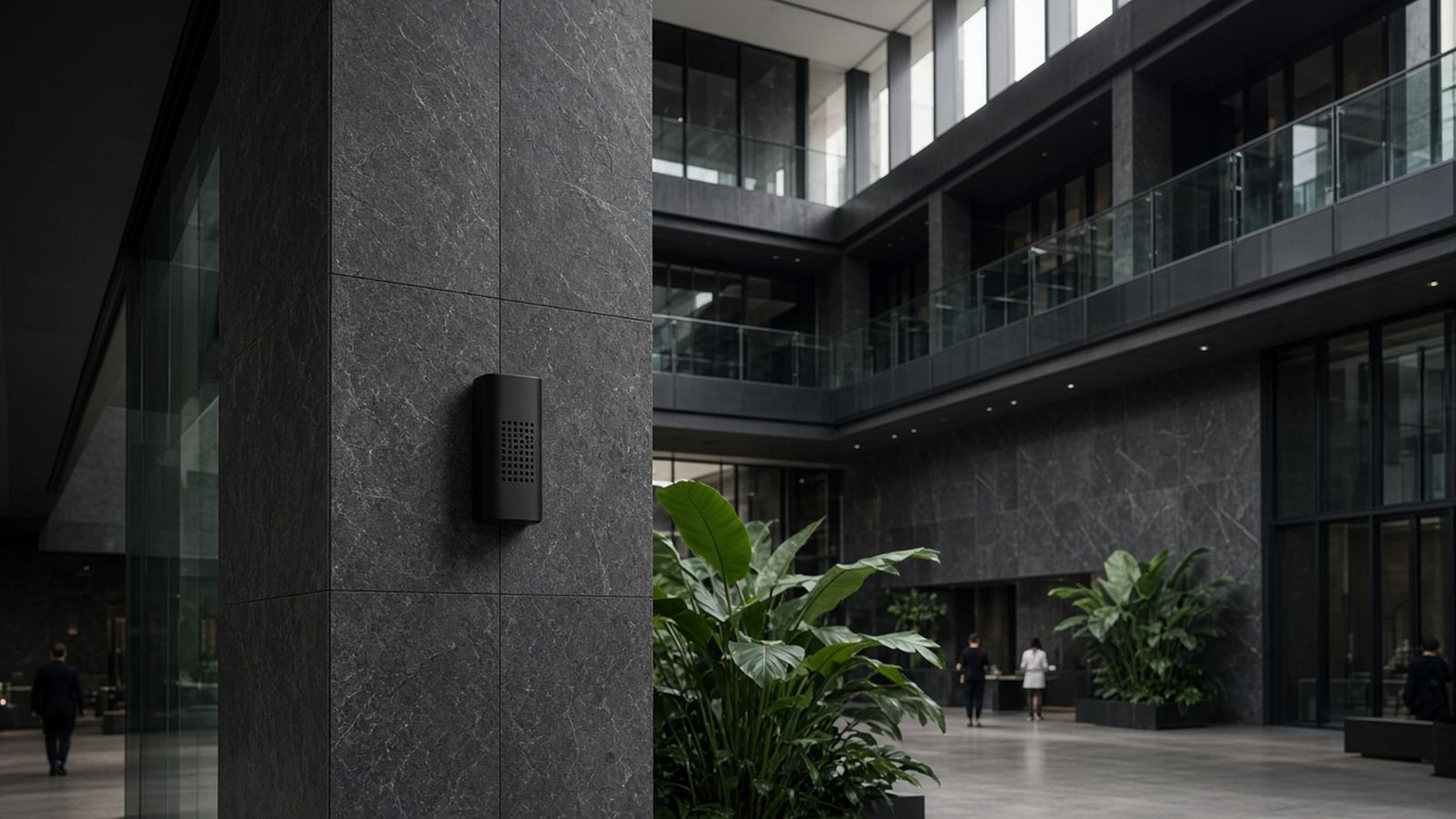
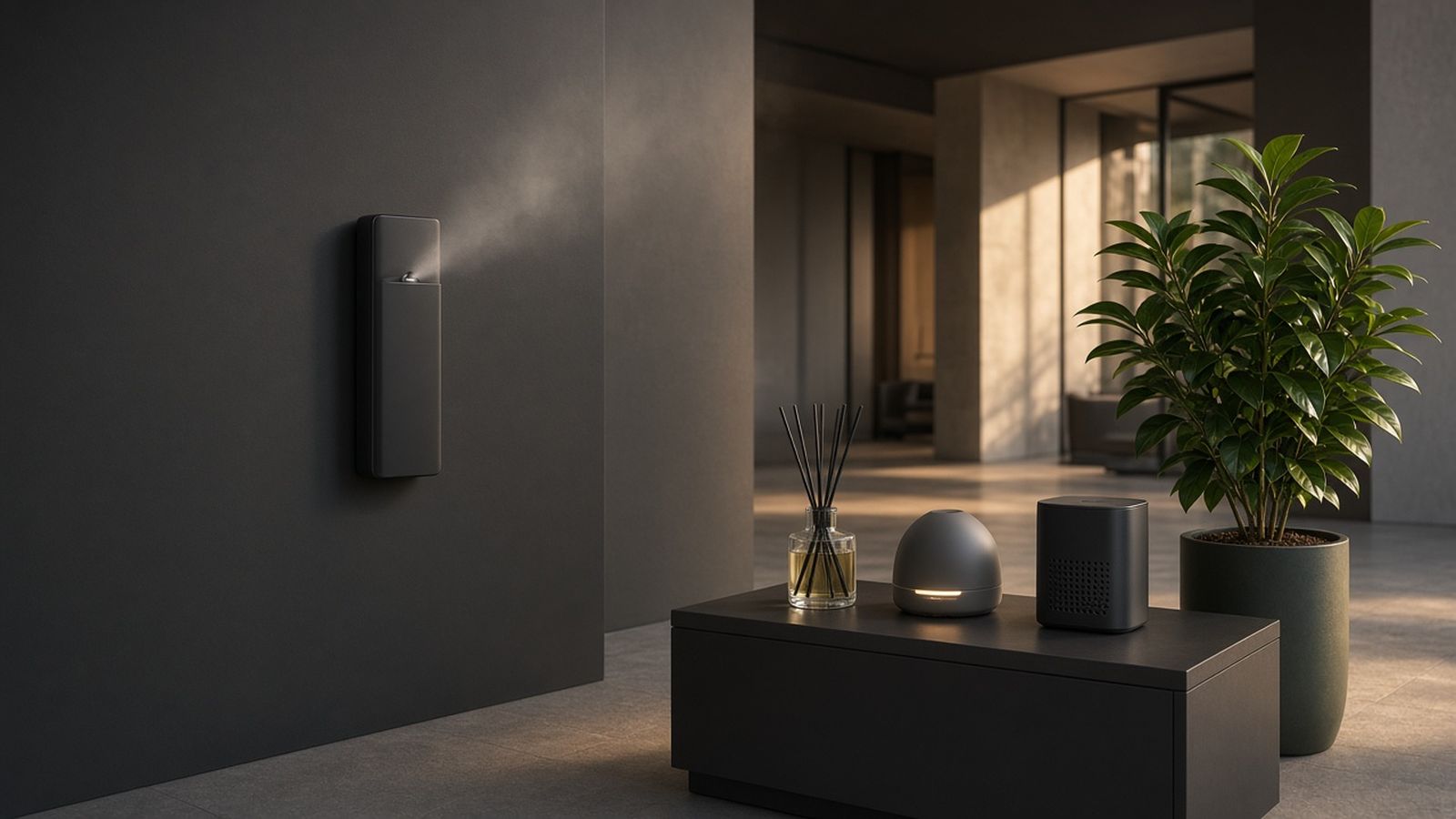
Standalone units sit on a shelf, a counter or a wall and scent a room. Larger units connect to the building's HVAC system, so the fragrance travels through the ducts and spreads across a larger area. In Jakarta, where most offices, malls and hotels run their air-conditioning all day, HVAC scenting is a practical choice for lobbies, atriums and whole floors.
Why businesses choose cold-air diffusion
- No water. Ultrasonic diffusers mix oil with water. That dilutes the scent and adds moisture to the room, and in a tropical climate there's already plenty of that.
- No heat. Heat changes a fragrance, because the lighter notes evaporate first. Cold-air diffusion keeps the scent close to how it was composed.
- No residue. The particles are fine enough to stay in the air, so they don't leave a damp or oily film on furniture and displays.
- Control. Output can be scheduled by the hour and the day and adjusted in small steps. A lobby can be a little stronger during busy check-in times and softer when it's quiet.
- Scale. The same principle works in a small fitting room and, with a larger unit on the HVAC system, in a multi-storey atrium.
Why owning a machine isn't the same as running a scenting programme
The machine is the easy part. What makes a space smell considered, rather than just perfumed, is everything around it.
In Jakarta, commercial cold-air units sell for roughly Rp1.3 million to Rp6 million each. That price is only the start: oil, parts and your team's time to refill, clean and adjust the unit all come on top.
The oil.
Cold-air diffusers need oil made for diffusion, with the right consistency to atomise cleanly and a composition that stays balanced as a fine mist. Cheap oil often isn't made for this. It can smell flat, clog the nozzle or vary from one bottle to the next. DuraScent uses fragrances from European fragrance houses, chosen for cold-air diffusion.
The setting.
Too much scent is worse than none. Staff notice it first, and complaints follow. Getting the level right means taking into account ceiling height, how often the air is refreshed, how often doors open, and the fact that people stop noticing a scent after a few minutes in the same room. That's why we judge the intensity as someone walking in from outside would, not as the staff member who has been at the desk all day.
The placement.
A unit next to the air-conditioning return grille can send most of its output straight back into the system. A unit right beside the reception desk can overwhelm the person who sits there for eight hours. Placement is a question of airflow, not decoration.
The servicing.
Nozzles clog, pumps wear and oil runs out, usually at the worst possible moment. A managed programme includes scheduled refills, cleaning and checks, so the scent a guest notices on a Friday evening is the same one they noticed on a Monday morning.
Where cold-air diffusers fit best
Hotel lobbies and corridors, retail stores and showrooms, clinics and salons, offices and coworking spaces, gyms and spas, cafés and restaurant entrances all use them. Large or open-plan spaces are often better served by HVAC scenting than by many standalone units. For single rooms and small shops, one standalone unit is often enough, as long as the oil and settings are right. Near dining areas, kitchens and treatment rooms, we use a very light setting or no scent at all.
How DuraScent looks after it
With DuraScent you don't buy the machine. We choose it from 20+ machine types, from battery-powered portable units for small rooms to systems for large areas, based on a free site survey. We set the scent from our Scent Library of 40+ fragrances, which runs 10 hours a day by default and can be adjusted to your opening hours. After that, our team takes care of refills and upkeep, including a monthly Preventive Maintenance Visit, and emergency service is free. You can try it first with a 3-day free trial.
Frequently asked questions
Is a cold-air diffuser the same as a medical nebuliser?
No. Both turn a liquid into a fine mist, but a scent diffuser only fragrances a space. It isn't a health device and should never be used to deliver medication.
Can I use essential oils in it?
Some machines can take them, but professional scenting normally uses fragrance oils made for diffusion, because they perform more consistently and are gentler on the machine.
How large an area can one unit cover?
It depends on the unit's output, the ceiling height and how air moves through the space. That's why we recommend a setup after a site survey, not from floor area alone.
Why does the scent seem to fade after a while?
Usually it's your nose adapting. After some time in the same room we become less sensitive to a scent, while guests who have just walked in still notice it. Step outside for a moment before deciding to turn it up.
Scent supports atmosphere and impressions. It doesn't replace cleaning or good ventilation, and results vary from space to space.