
Scent in Spas and Wellness Spaces: A Calm Atmosphere Without Overdoing It
In a spa, the atmosphere is part of what guests come for. They notice the light, the music, the towels, the temperature and, very quickly, the scent. A soft, natural-feeling fragrance can make the space feel calm and cared for from the moment guests step in. Too much, and the same space feels heavy.
Where scent belongs in a spa
Entrance and reception.
The welcome. A gentle, recognisable scent here sets the tone and becomes part of how guests remember the spa.
Relaxation lounge.
A soft version of the same scent, at a low level, suits a space where guests rest before or after a treatment.
Corridors.
A light touch connects the spaces as guests move between them.
Treatment rooms.
Many spas already use scented oils, lotions and products during treatments. Adding ambient scent on top can make the room feel crowded. Keep treatment rooms very light or unscented, and let the products speak for themselves.
Changing rooms and washrooms.
A fresh, clean impression supports good housekeeping. It doesn't replace it.
Scent directions that often suit spas
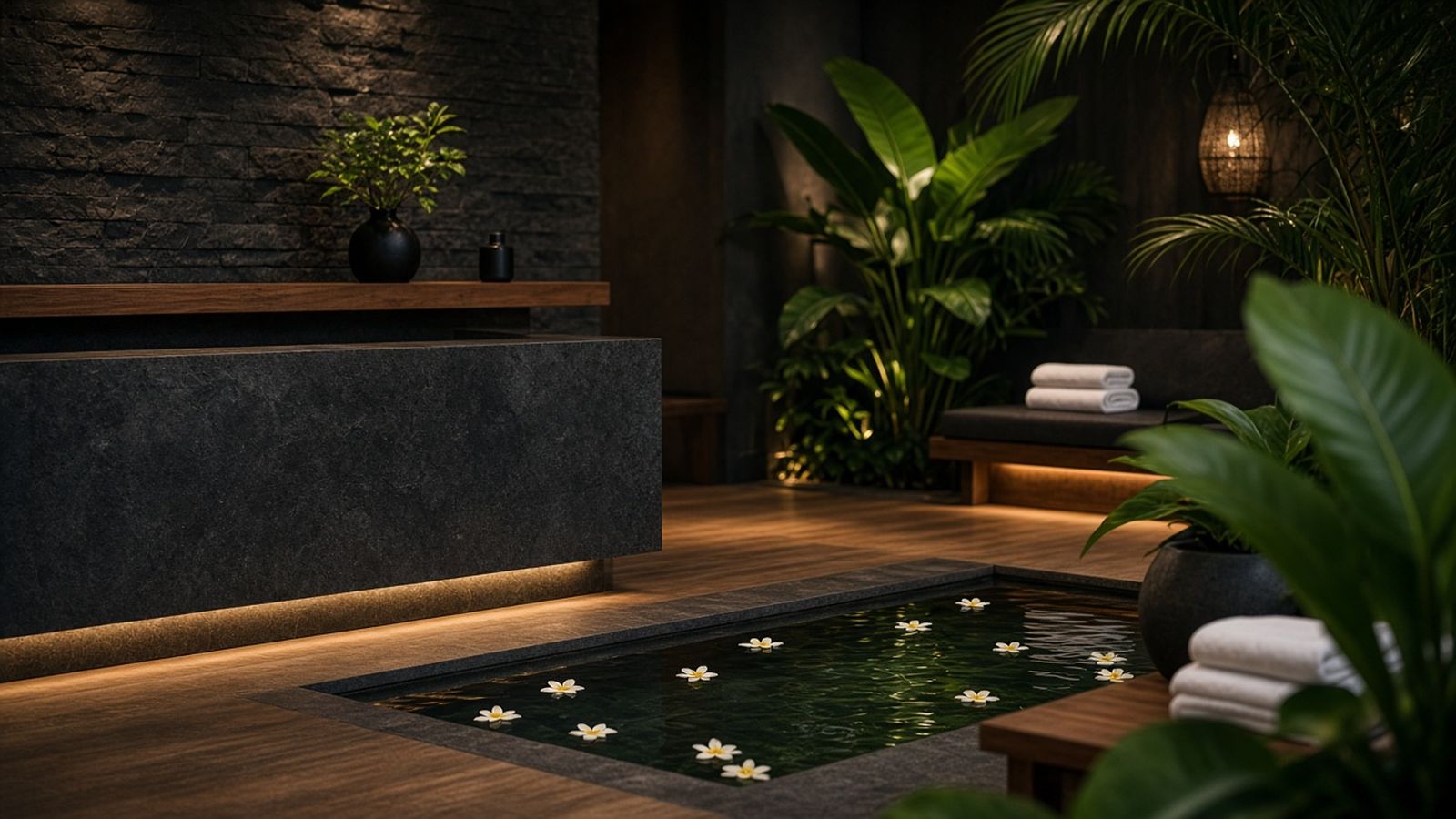
- Soft florals such as jasmine-style or frangipani-style notes, for a gentle, tropical feel.
- Green and herbal notes such as lemongrass-style or tea-style accords, for a fresh, natural feel.
- Light woods such as sandalwood-style notes, for warmth in lounges.
- Clean citrus for reception areas that should feel bright.
These describe the atmosphere. We don't describe scent as a therapy or a treatment.
Why less is more
Guests in a spa breathe slowly and stay for a long time, often in small rooms. A level that seems right in a busy lobby will feel too strong in a quiet lounge. Start low, and judge with a fresh nose: staff who work there all day get used to the scent and may think it's fading when guests still notice it clearly.
Clean air first, then scent
Spas use treatment oils, lotions and cleaning products, and some areas pick up the smell of laundry or damp. Scent shouldn't be used to cover these. Good ventilation and housekeeping keep the air fresh, and ambient scent then adds a gentle layer on top. Scent is not an odour remover.
Even, gentle coverage
How the scent is spread matters as much as which scent you choose. It should feel even across a space, without a strong spot next to the machine. In larger spas, HVAC scenting carries a dry mist through the air-conditioning ducts. Smaller studios and single rooms use compact standalone units. Cold-air diffusion uses no water or heat and leaves no residue on towels, linen or surfaces.
Choosing the scent
Look for a scent that feels calm and clean, fits your brand and suits a wide range of guests. Very sweet or heavy fragrances rarely work in a spa. Choose from a library or develop a scent only your spa uses; either way, test it in your own rooms before deciding.
Guests with sensitivities
Some guests are sensitive to fragrance. Keeping one treatment room unscented for guests who prefer it, and keeping levels low in shared areas, makes everyone more comfortable.
How DuraScent helps spas
We survey your spa, map the zones with you, and help you choose a scent from our Scent Library of 40+ fragrances from European fragrance houses. Signature Scent, a scent developed only for your spa, is available as a separate optional service. You can try it free for 3 days. Our team keeps it consistent with routine refills and a monthly Preventive Maintenance Visit, so every guest is welcomed the same way.
Scent supports atmosphere and impressions. It isn't a therapy or health product, and results vary from space to space.