
What Shapes the Cost of Scenting Your Business, and Why a Managed Service Often Works Out Better
When business owners ask what scenting costs, they usually mean the machine. But the machine is the smallest part of what keeps a space smelling right every day. What you actually pay for is the fragrance, the setup for your particular room, and the routine care that keeps the scent the same in week ten as on day one.
This guide covers the factors that shape a scenting quote, what a monthly service should include, and how to compare a managed service with buying a diffuser yourself.
What scenting costs in Jakarta
On the market, renting a single scent unit with fragrance and servicing typically costs Rp500,000 to Rp1.5 million per unit per month. Buying your own commercial unit costs roughly Rp1.3 million to Rp6 million per unit, before oil, parts and staff time. DuraScent's managed service starts from Rp300,000 per unit per month, all-in: fragrance oil, refills and a monthly Preventive Maintenance Visit.
What a monthly scenting service should include
When you compare offers, check that each one covers the same four things:
- The equipment. The diffuser is installed at your premises and stays the provider's responsibility.
- The fragrance. Oil refills are included, whether you choose from a scent library or have a custom signature scent made.
- Setup for your space. Units are placed with airflow in mind, and the intensity and schedule are set for each area.
- Ongoing care. Scheduled refills, cleaning, checks, adjustments and repair or replacement of faulty units.
An offer that looks cheaper because it leaves out servicing or limits refills isn't really cheaper. It just shifts the work and the risk back onto you.
The factors that shape the cost
1. The volume of air, not just the floor area.
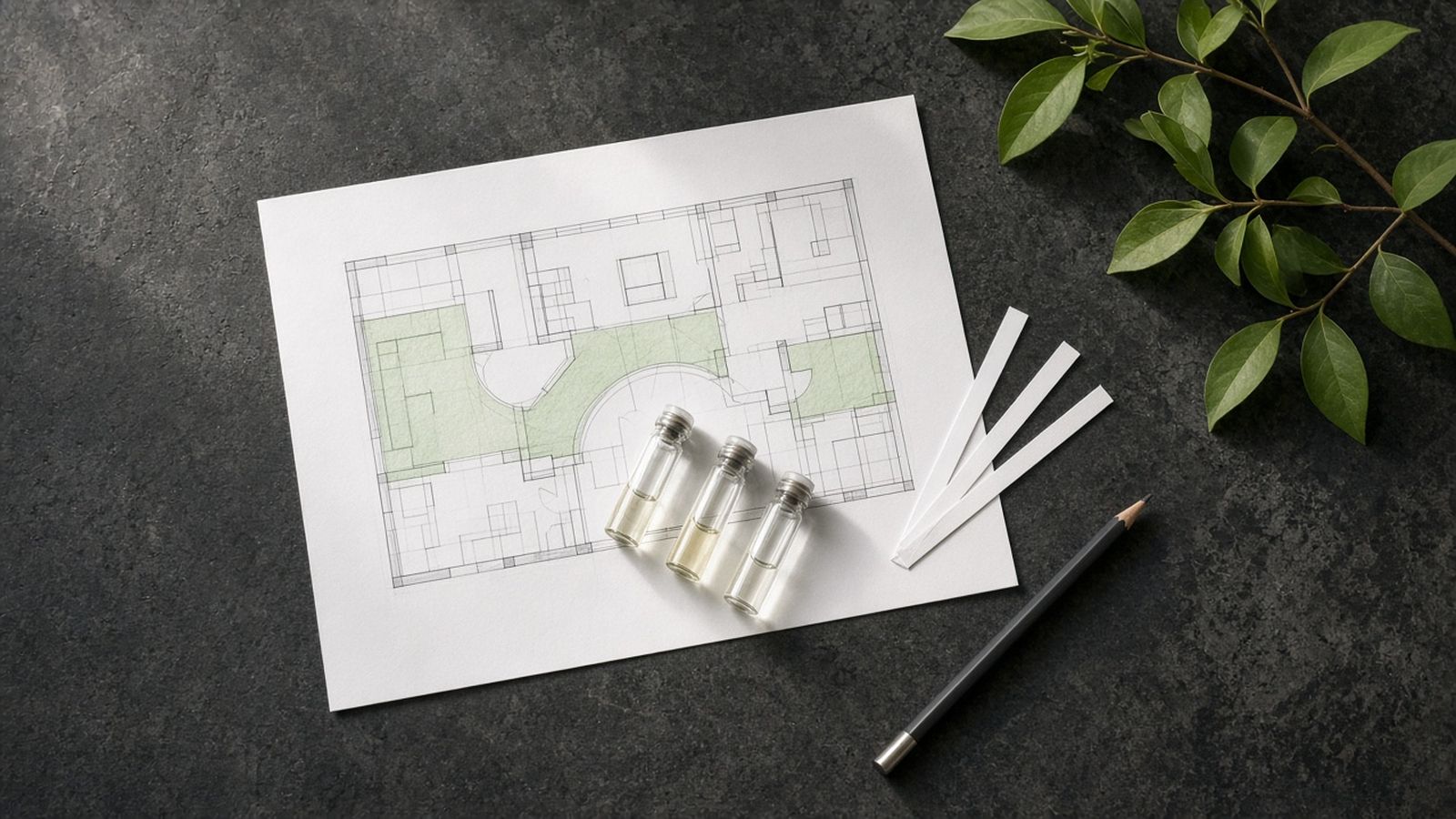
Two spaces with the same floor area can need very different setups. A lobby with a high ceiling, a showroom with a mezzanine, or a shop on a busy mall corridor with an open front all hold more air, or lose it faster, than the floor plan suggests. Strong air-conditioning, frequently opened doors and busy periods also carry scent away. That's why a quote based on square metres alone, without a visit, tends to be either too high or too low.
2. The number of zones.
A small boutique is often one zone. A clinic might have a reception, a waiting area and treatment rooms that should stay unscented. A hotel can have an entrance, a lobby, lift areas, corridors and a spa, each needing its own level. More zones usually means more units, or a larger system.
3. Opening hours.
Our machines run 10 hours a day by default, and the schedule can follow your opening hours. A café open from early morning until late, or a gym open seven days a week, uses more fragrance than an office that closes at six. Changes in opening hours, for example during Ramadan, can be built into the schedule.
4. Standalone units or HVAC scenting.
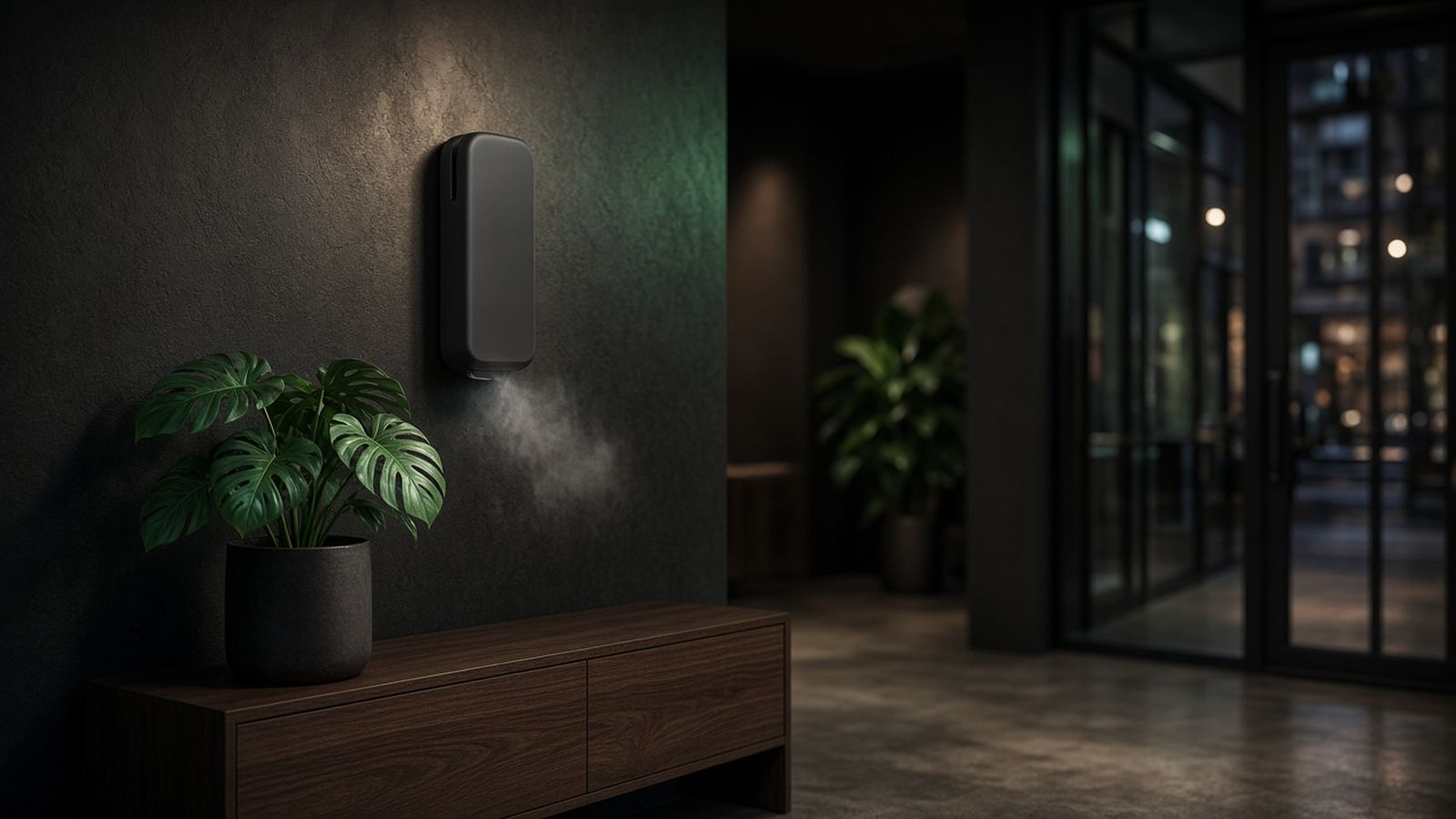
Standalone units are the simplest option for rooms and small shops. For large spaces, scenting through the building's air-conditioning (HVAC) spreads the fragrance more evenly and keeps the equipment out of sight. HVAC scenting takes more planning at the start and usually needs coordination and approval from building management.
5. Library scent or custom signature scent.
Choosing from a scent library involves no development work. A custom signature scent, created for your brand, takes a brief, sampling and refinement before it's rolled out, so it's planned as a separate project alongside the ongoing service.
6. Fragrance quality.
Fragrance oils vary widely. Oil made for diffusion by a professional fragrance house atomises cleanly, smells the same from one refill to the next and is less likely to clog a machine. Cheap oil of unknown origin may seem like a saving until it smells flat, changes from batch to batch or damages the unit.
7. Service level.
How often the technician visits, what they check, and how quickly a problem is fixed all affect the cost, and they decide whether the scent stays consistent.
Buying your own diffuser: the costs that aren't on the price tag
Buying a machine can look cheaper at first. Then the other costs start to add up:
- Fragrance oil, bought again and again, plus the work of choosing and storing it.
- Staff time spent refilling, cleaning and adjusting the machine instead of looking after customers.
- Repairs and spare parts when a nozzle clogs or a pump wears out, plus the days your space goes without scent while you wait.
- The risk of getting the setting wrong. A scent that's too strong causes complaints; one that's too weak is a wasted spend. Staff who sit next to the machine all day get used to the scent and may keep turning it up.
- Equipment that ages. The money tied up in the machine stays there, even once newer machines are available.
For a single small room, buying a machine can be enough. For a business with several areas or branches, or one that wants the scent to be part of its brand, a managed service is often the better value once every cost is counted.
How to judge whether it's worth it
Scent isn't a guarantee of higher sales, and any provider who promises a specific return deserves a closer look. What the research does show is that ambient scent can influence how people perceive a space. In one study, shoppers rated a store and its products more favourably when it was softly scented[1]. In another, a simple, easy-to-recognise scent was linked to higher in-store spending, while a more complex blend didn't show the same effect[2].
The practical approach is to start with one main customer-facing area, note how things stand beforehand (customer feedback, time spent in the space, sales trends), then look at them again after several weeks of consistent scenting. Consistency matters: a scent that runs out or varies between visits can't become part of how customers remember you.
Warning signs in a quote
- A quote without a site survey, or one based only on floor area.
- No clear answer about where the fragrance oil comes from.
- Servicing that's charged separately or capped.
- A contract with unclear terms, notice periods or exit conditions.
- A scent described as a copy of a well-known hotel or brand fragrance.
For a full checklist, see how to choose a scenting provider.
How DuraScent prepares a quote
DuraScent doesn't sell diffusers or fragrance oils. We're a managed service. We start with a free site survey, where we look at ceiling height, air-conditioning and airflow, how often doors open, busy hours and opening hours. Then we recommend the machine, the scent from our Scent Library of 40+ fragrances from European fragrance houses, and the placement. You can try it in your own space for 3 days free of charge before you decide.
Once the service is running, our team installs and refills the units, and keeps them in good condition through a monthly Preventive Maintenance Visit. Emergency service is free, and the service runs monthly.
Frequently asked questions
Why can't you quote a price over the phone?
Because the cost depends on the volume of air, the number of zones, opening hours and the type of system. A short survey gives a recommendation that fits your space, rather than a guess.
Is it cheaper to buy a diffuser?
The machine on its own can be. Once you add oil, staff time, repairs, downtime and the risk of the wrong setting, the total is often not much different, and the work stays with you.
Does a custom signature scent cost extra?
A signature scent is developed as a separate project before rollout. If you're just starting out, a scent from our library is usually the easiest first step.
Do larger spaces always need an HVAC system?
Not always. Some large spaces work well with several standalone units. The survey shows which option suits your layout and airflow.
Scent supports atmosphere and impressions. It doesn't replace cleaning or good ventilation, and results vary from space to space.
Sources
Citations are shown in their original English; DOI links open the publisher’s record in a new tab.
- Spangenberg, E. R., Crowley, A. E., & Henderson, P. W. (1996). Improving the store environment: Do olfactory cues affect evaluations and behaviors? Journal of Marketing, 60(2), 67–80. https://doi.org/10.1177/002224299606000205
- Herrmann, A., Zidansek, M., Sprott, D. E., & Spangenberg, E. R. (2013). The power of simplicity: Processing fluency and the effects of olfactory cues on retail sales. Journal of Retailing, 89(1), 30–43. https://doi.org/10.1016/j.jretai.2012.08.002